



How to Hire a General Contractor in Dallas In 2026
Hiring the right general contractor in Dallas starts with verifying registration, insurance coverage, project experience, and references. Taking time to compare contractors before signing a contract can help homeowners avoid costly mistakes, construction delays, and unexpected expenses during a remodeling or building project.
What Does a General Contractor Do?
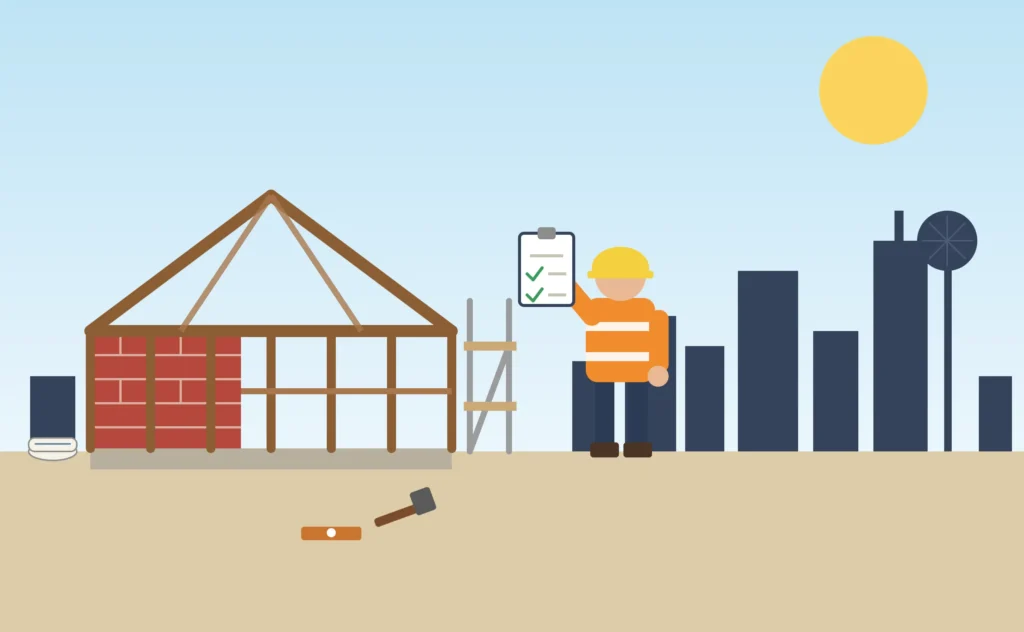
A general contractor manages construction projects from planning to completion. They coordinate permits, inspections, subcontractors, materials, schedules, and daily construction activities to keep remodeling and building projects organized from start to finish.
Whether you’re planning a kitchen remodel, bathroom renovation, room addition, garage conversion, or whole-home renovation, a general contractor serves as the primary point of contact throughout the project.
Essential Preconstruction And Project Planning Services
Preconstruction planning helps homeowners understand project costs, timelines, permit requirements, and construction expectations before work begins. A general contractor reviews the scope of work, prepares project estimates, evaluates site conditions, and helps identify potential issues that could affect the budget or schedule.
Project Delivery Methods And Technology Integration
General contractors use different project delivery methods depending on the size and complexity of the project. Some homeowners hire separate designers and contractors, while others choose design-build services that combine design and construction under one contract.
Quality Management And Process Excellence
Quality management helps ensure construction work meets project requirements and local building standards. General contractors coordinate inspections, monitor workmanship, review completed work, and address issues before they affect other phases of construction.
Project Close-Out And Warranty Services
Project close-out is the final stage of construction. During this phase, contractors complete remaining punch-list items, conduct final walkthroughs, and confirm required inspections have been completed.
What Should You Verify About Licensing, Permits, Insurance, And Costs In Dallas?
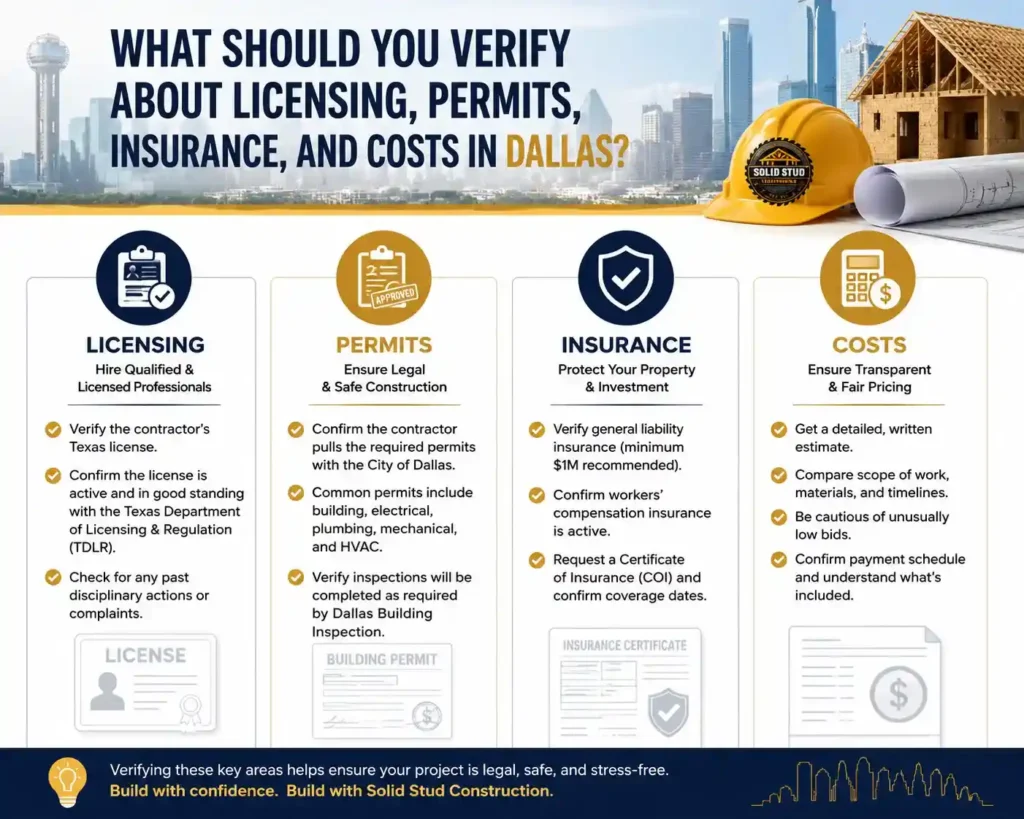
Before hiring a dallas general contractor , homeowners should verify contractor registration, insurance coverage, project experience, references, payment terms, and permit responsibilities. Taking time to review these details can help reduce construction risks and prevent costly problems during the project.
Licensing And Permits
Verify that the contractor is properly registered with the City of Dallas and understands local permit requirements. For projects involving structural work, electrical, plumbing, or HVAC systems, confirm who will handle permits and inspections.
Insurance Coverage And References
Ask for proof of insurance and request references from recent projects. Insurance helps protect homeowners during construction, while references provide insight into the contractor’s work quality and reliability.
Supervision And Subcontractors
Understand who will oversee the project and how often they will be on-site. It’s also important to know which trades will be completed by subcontractors and how those teams are managed.
Timeline And Change Management
Review the construction timeline before work begins and ask how delays, project updates, and schedule changes will be handled. A clear change order process helps prevent unexpected costs during the project.
Questions to Ask About Project Management
| What to Verify | Why It Matters |
|---|---|
| Project Timeline | Helps set realistic construction expectations. |
| Permit Responsibility | Confirms who handles permits and inspections. |
| On-Site Supervision | Clarifies daily project oversight. |
| Subcontractor Management | Helps ensure trade coordination. |
| Change Order Process | Prevents unexpected cost disputes. |
| Communication Schedule | Keeps homeowners informed throughout construction. |
General Contractor vs. Handyman: Which Do You Need?
The right choice depends on the size of the project, permit requirements, and the number of trades involved. A handyman is usually a good fit for small repairs and maintenance tasks, while larger remodeling projects, room additions, structural work, and permit-required construction are typically better handled by a Dallas general contractor.
| Project Type | Use a Handyman | Use a General Contractor |
|---|---|---|
| Fixing a Leaky Faucet | ✅ Yes | ❌ Not Needed |
| Painting a Room | ✅ Yes | ❌ Not Needed |
| Minor Drywall Repairs | ✅ Yes | ❌ Not Needed |
| Installing Flooring in One Room | ✅ Usually | ❌ Often Not Needed |
| Cosmetic Bathroom Updates | ✅ Sometimes | ⚠️ Depending on Scope |
| Full Bathroom Remodel | ❌ No | ✅ Recommended |
| Kitchen Remodel | ❌ No | ✅ Recommended |
| Garage Conversion | ❌ No | ✅ Required for Most Projects |
| Room Addition | ❌ No | ✅ Required |
| Open-Concept Conversion | ❌ No | ✅ Structural Work Required |
| Electrical Panel Upgrade | ❌ No | ✅ Licensed Trades Required |
| Roofing Replacement | ❌ No | ✅ Recommended |
| Whole-Home Renovation | ❌ No | ✅ Required |
Red Flags and Contractor Scams to Watch For
Hiring the wrong contractor can lead to project delays, unexpected costs, poor workmanship, and unfinished construction. Before signing a contract, homeowners should understand the warning signs that often indicate problems later in the project.
Contractor Scams to Avoid in 2026
Storm-chasing contractors remain one of the most common scams in North Texas. These companies often appear after severe weather, offer quick repairs at unusually low prices, collect large deposits, and disappear before completing the work.
Homeowners should also be cautious of contractors who cannot verify their business address, contractor registration, insurance coverage, or recent project history. Always verify information independently before signing an agreement.
Common Red Flags
Several warning signs can indicate that a contractor may not be the right fit for your project:
- Requests for large upfront payments before work begins.
- No written contract or incomplete project details.
- No proof of insurance or contractor registration.
- Refusal to provide recent customer references.
- Pressure to sign immediately.
- Extremely low bids compared to other estimates.
- Poor communication before construction starts.
- No clear timeline or payment schedule.
- Unwillingness to discuss permits and inspections.
If something feels rushed, unclear, or too good to be true, take time to get additional estimates and verify the contractor’s credentials before moving forward.
Frequently Asked Questions
How Do I Find a Good General Contractor in My Area?
A good contractor should have active registration, insurance coverage, recent project references, and experience with projects similar to yours. Compare at least three estimates and verify permits, reviews, and previous work before signing a contract.
What Does a General Contractor Do?
A general contractor manages construction projects from start to finish. Their responsibilities typically include permits, inspections, scheduling subcontractors, ordering materials, coordinating trades, and overseeing daily construction activities.
How Much Does a General Contractor Charge in 2026?
Most contractors charge either a fixed project price, a percentage of the total project cost, or an hourly consulting rate. Fees vary based on project size, complexity, permits, and construction requirements.
How Do I Verify a Contractor Is Licensed?
Texas does not issue a statewide license for general contractors. Homeowners should verify City of Dallas contractor registration, insurance coverage, business information, and references before hiring a contractor.
What Are Red Flags When Hiring a Contractor?
Common red flags include large upfront payment requests, no written contract, missing insurance documentation, unrealistic pricing, poor communication, and refusal to provide references.
Should I Hire a General Contractor or Handyman?
A handyman is often suitable for minor repairs and maintenance. Remodeling projects involving permits, structural work, plumbing, electrical systems, or multiple trades are typically better managed by a general contractor.
How Many Estimates Should I Get Before Hiring?
Most homeowners should obtain at least three written estimates. Comparing multiple bids helps you understand pricing, project scope, timelines, and contractor experience before making a decision.
What Is Included in a Contractor Contract?
A construction contract should clearly outline the scope of work, project timeline, payment schedule, materials, permit responsibilities, warranty information, and procedures for handling change orders.
How Much Should I Pay Upfront to a Contractor?
Deposit amounts vary by project, but homeowners should be cautious of contractors requesting large payments before work begins. Payments are often tied to project milestones as construction progresses.
What If a Contractor Does Bad Work?
Start by documenting the issue and discussing it directly with the contractor. Review the contract and warranty terms, request corrections in writing, and keep records of all communication throughout the process.
